
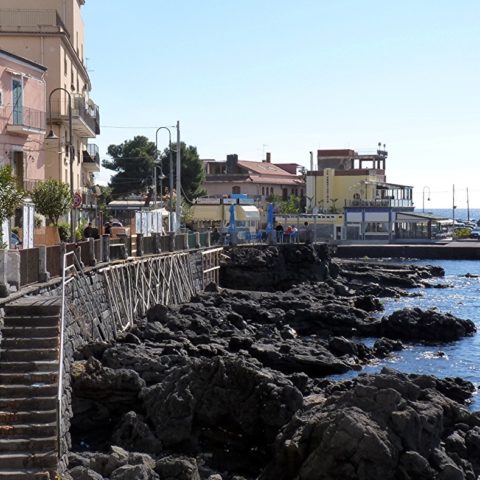
Capomulini
The village of Capomulini is located at about five kilometers from Acireale. This seafaring village, which borders the northern side of Catania Gulf, until the Middle Ages was the “old” Acireale. Not to be missed the natural harbor. … read more
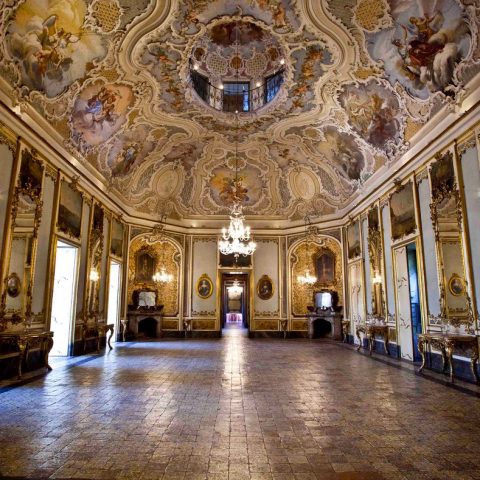
Palazzo Biscari
Along via Dusmet, not far from the “Pescheria”, it’s located the Palazzo Biscari, which takes its name from the Biscari principles who lived there. The palace has several rooms in rococo style, full of frescoes and decorations. Today its museum hosts MF “Museum&Fashion”. … read more
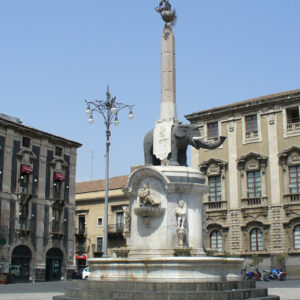
Elephant’s fountain
The Elephant’s fountain or even “Liotru’s fountain” was built by Gianbattista Vaccarini in 1757. In the basement there are some carved cherubs and two bas-reliefs representing the city’s two rivers, the Simeto and the Amenano. For people of Catania it is ‘u Liotru’. … read more
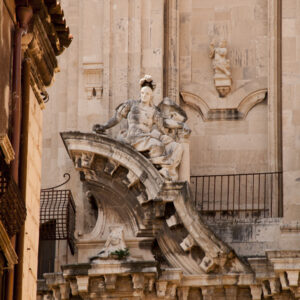
St. Benedict’s Church
It’s located at the beginning of via Crociferi, the Saint Benedict’s Church is an example of late baroque architecture in Catania. It was rebuilt immediately after the earthquake in 1693 with the S. Benedict’s arch, that was erected in 1704. … read more
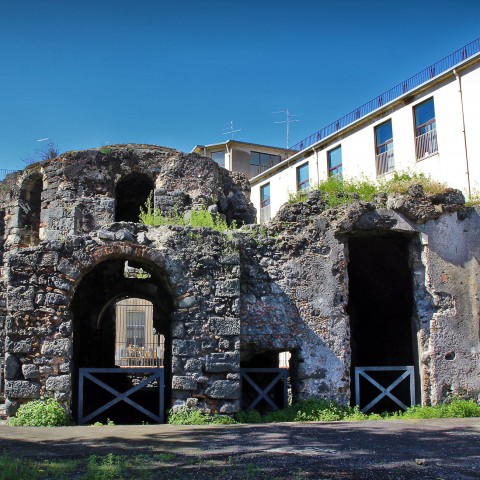
Indirizzo’s Thermae
The Indirizzo’s thermae are still in good condition, there is one of the Roman buildings still visible in the city. The presence of the thermal building demonstrates how the city was developed in the late Roman era. Inside of it, it is possible to see the original frame. … read more
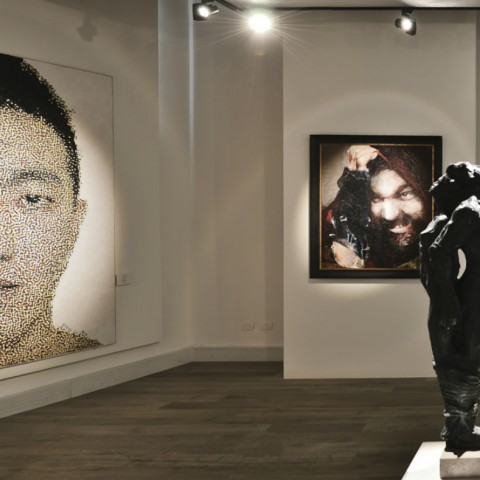
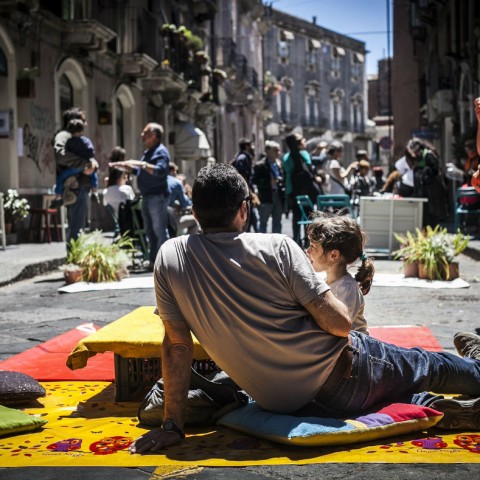
Via San Michele
Behind Via Etnea, there is a small, vital and rich oasis of creativity. In via San Michele, there are the more whimsical crafts meeting the public. You will find painters, artists, ateliers of graphic arts and photography where you can taste refined dishes and excellent wines. … read more
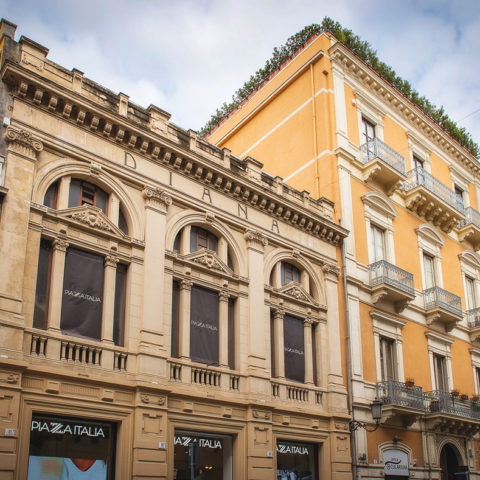
DIANA CINEMA
Now the site of a commercial activity, the cinema was designed by the architect Paolo Lanzerotti after the commission by Baron Filippo Pancari. The cinema was opened to the public … read more
La Sognatrice and Amare
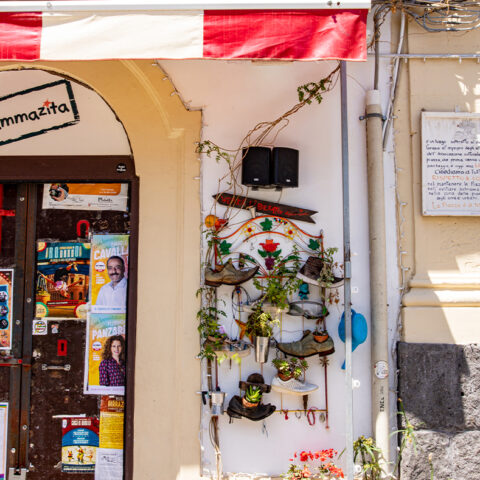
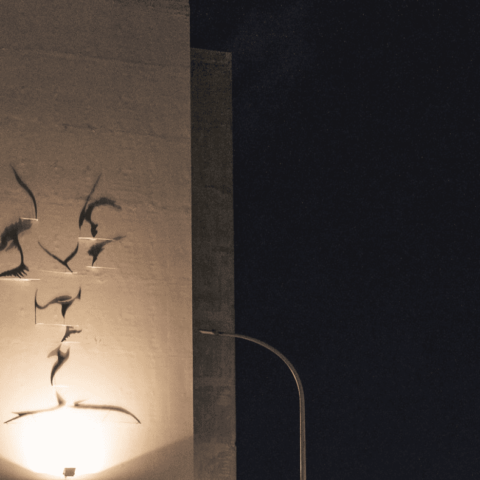
In the vibrant heart of the Librino district in Catania, art becomes a beacon of hope and renewal. Through the murals by Fabrizio Corneli, the anonymous facades of the buildings are transformed into living canvases. … read more
Massimo Bellini Theatre
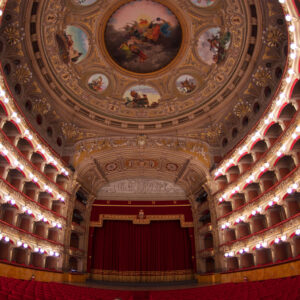
The Massimo Bellini Theatre is the place where it stages the opera. During its opening, in 1890, it was staged the representation of ‘Norma’ by Vincenzo Bellini. The central hall is composed of four tiers of stages and galleries on which dominates the evocative fresco. … read more
Village of Santa Caterina
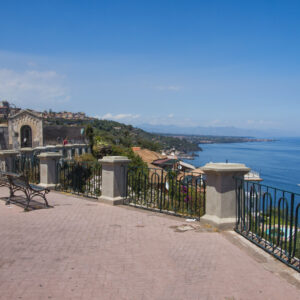
The village of Santa Caterina, formerly known as “Cavallari”, is made up of narrow streets decorated with flowers and citrus trees. The village is located on one of the highest lava ridges of Timpa; an impressive view enriched by the precipice on the sea. … read more
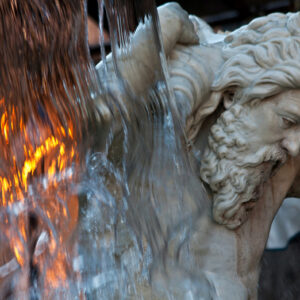
Amenano’s fountain
In front of the Elephants’ Palace, the Town Hall, on the south side of Piazza Duomo you can see the Amenano’s fountain, its name derives from the Amenano river that flows underground. People of Catania call this marble fountain: ‘acqua o’ linzolu’. … read more
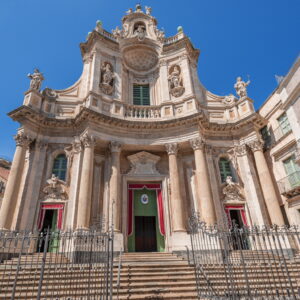
Collegiata Church
It’s one of the oldest churches in the city, in fact, the original structure was probably built in the early centuries AD. After the earthquake in 1693, the Church was destroyed almost all and it was rebuilt by Antonio Amato, who modified it. … read more
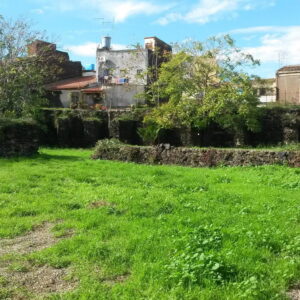
Bastion of Infetti
The bastions were built in Catania in the early sixteenth century by Emperor Charles V of Spain. The Bastion of Infetti (infected) is the best preserved among the eleven bastions that, together with seven gates, formed the defensive system of Catania. … read more
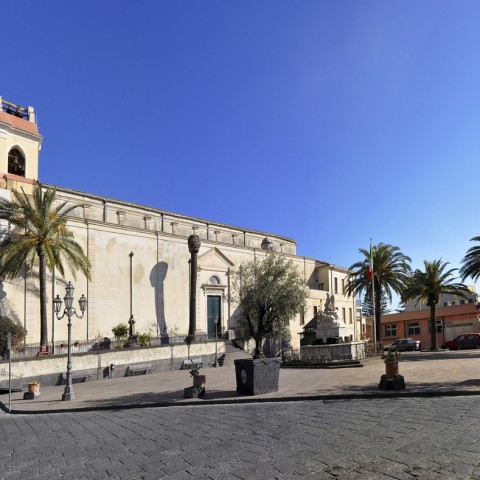
Piedimonte Etneo
Piedimonte Etneo is on the eastern slopes of Etna. Among its principal monuments is the Mother Church erected in the XVIII century and dedicated to the Madonna del Rosario which dominates Piazza Madre Chiesa, the Convent of the Capuchin Fathers and the church of the Immacolata. … read more
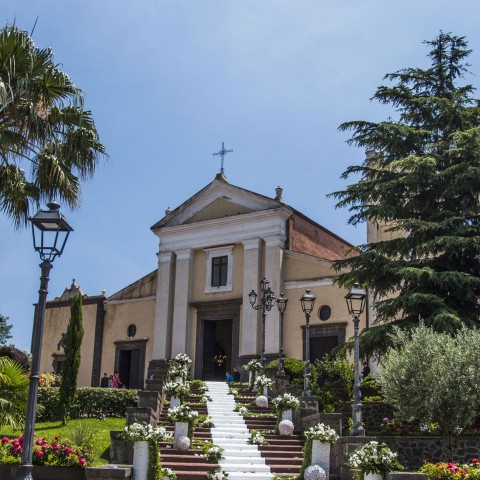
Tremestieri Etneo
The commune of Tremestieri Etneo is situated in a hilly area dominated by the volcano, at about 400 m.s.l. The territory of Tremestieri, given its favourable environmental conditions and its position, has been settled since ancient times. Today it is well known for its local agricultural and craftworks products. … read more
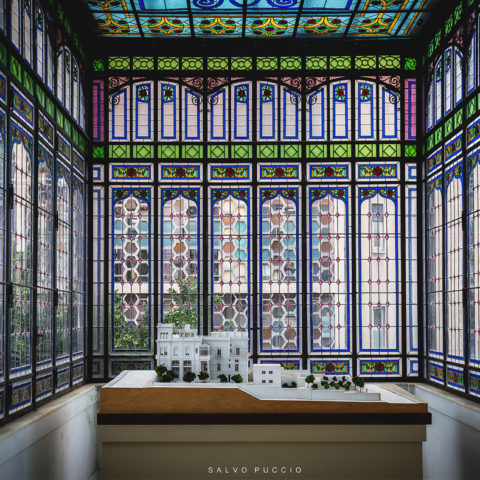
VILLA ZINGALI
The villa was designed by the architect Paolo Lanzerotti and represents the testimony of one of the most evocative Liberty buildings in Catania. A building composed of a central and … read more
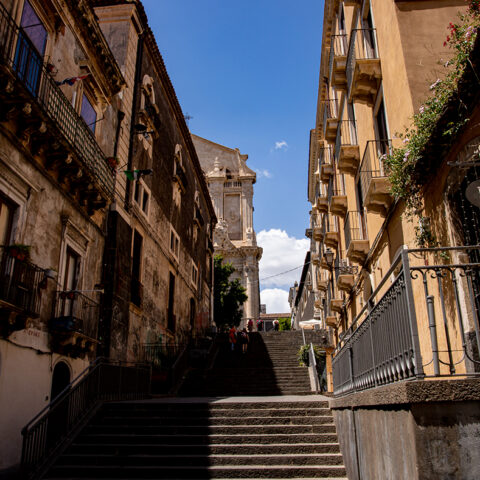
Scalinata Alessi
A strategic point in which to observe the heart of the city’s Baroque art, which in recent years has become a meeting place for the LGBTQIA+ community. … read more

Mondo Fluttuante Studio
Mondo Fluttuante Studio is a versatile and dynamic art studio where different forms of artistic expression converge. Its owners have decided to open their doors to the city, so they can show everyone their creative process! … read more