

Church of St. Filippo Neri
The Church dedicated to “San Filippo Neri” is one of the most important churches of Ortigia which serves as church for many districts of eastern Ortigia (Sperduta and Mastrarua). Established … read more

Palazzo Pupillo
Declared monumental asset by the Superintendency of the BB.CC.AA., Palazzo Pupillo is a historic monument full of late Baroque decorations and forms. … read more

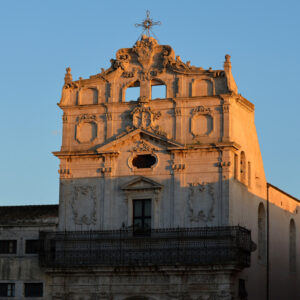
Church of Saint Lucia alla Badia
The Church and the Cistercian convent dedicated to St. Lucia had a prominent place in Syracuse, because of its location in the heart of Ortigia and especially for the feast … read more

Eurialo Castle
The Castle Euryalus represents one of the largest and most complete military works of the Greek period. The name derives from the Greek word Eurvelos (“large base nail “), which … read more

Bagno Ebraico (Jewish Bath)
The Jewish bath, the center of Jewish spiritual life, testifies to the existence of a Jewish community of Syracuse among the oldest in the Mediterranean. The miqweh, located 18 meters … read more

Casa dei miti
A multimedia and interactive permanent exhibition on Greek mythology that uses touch screen and other multimedia tools. Casa dei Miti (House of Myths) aims to the spreading of myths and … read more

Church of the Holy Spirit
Designed in 1727, the Church of the Holy Spirit was built on the ruins of the “First Church” of Siracusa. The tower facade of the Church is in eighteenth-century Baroque style, rich in decorations and in Corinthian architectural elements. … read more

Palazzo Impellizzeri
The Impellizzeri palace is one of the noble rococo buildings of Siracusa with 31 masks and floral trims; located on the island of Ortigia, along the majestic Via Maestranza. … read more
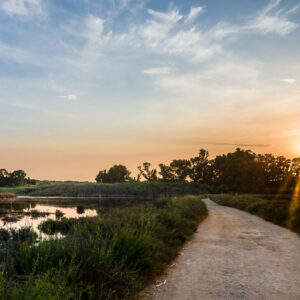
Vendicari Reserve
The naturalistic reserve of Vendicari, thanks to the presence of quagmires, areas cherished as a resting place for migratory birds, is the most important humid area in the Southeast coast … read more

Fonte Aretusa
The legend tells that river god Alpheus fell in love with Arethusa, nymph of Artemis, and he tried to seduce her in every way. Aretusa invoked the intervention of the … read more

The Marine Protected Area of Plemmirio
The Marine Protected Area of Plemmirio extends from Punta della Mola to Punta Milocca, south of Syracuse. A long beach, where to the wonders of the seabed and of the … read more

Roman Amphiteather
Dating back to the imperial age (III – IV century AD), the Roman amphitheater is one of the greatest buildings of this kind in existence. Elliptical, outer diameters measure m. … read more

Siracusa 3D Reborn
A Virtual Journey in Greek Syracuse in 3D A multi-lingual Virtual Journey, lasting 25 minutes, which through sophisticated reconstructions in CGI by IBAM – Institute for Archaeological and Monumental Heritage, … read more

Church of the Jesuit College
The church of the Jesuit College, the largest baroque church of Ortigia, was dedicated to St. Joseph and Ignatius of Loyola. Designed in 1635, the monastery was restored by Pompeo Picherali, after the devastating earthquake of 1693. … read more

Piazza Duomo Siracusa
The Piazza Duomo of Siracusa is characterized by its semicircular plan, in the center of which stands the magnificent Cathedral of Ortigia. From this you can admire and visit some of the main historical and religious buildings in the center. … read more
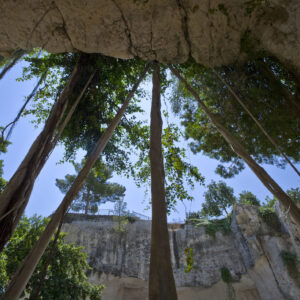
Latomia of the Capuchins
The one of Capuchins is certainly the oldest and most beautiful Latomia of Syracuse. The link with the Minor Friars of St. Francis dates back to 1582, when the University … read more
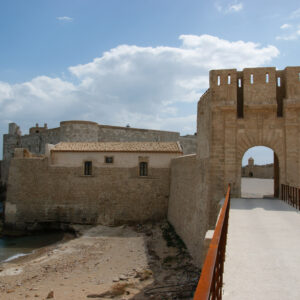
Maniace’s Castle
In front of the mythical Fonte Aretusa, we can see the imposing Maniace’s Castle, on the extreme tip of the island. The building is among the most important monuments of … read more

Archaeological site of Akrai
Akrai’s colony was founded in 664-663 BC. by the Syracusans Corinthians. Destroyed by the Arabs at the apex of its glory in the 827 BC., the ruins of the city … read more

Catacombs of St. Lucia al Sepolcro
The third century A D. catacomb consists of burial sites, then transformed into areas of worship; in recent times the catacomb was used as a bomb shelter. Over the centuries … read more