

Forza d’Agrò
HISTORY. Its name, a reduction of Antico Casale d’Agrilla, evokes the “fortress”. This town perched on the hill at about 420 meters above sea level, developed around a castle at the … read more
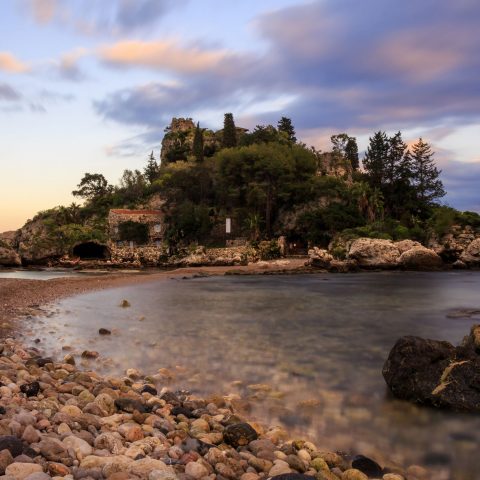
Isola Bella
Donated in 1806 to the City of Taormina from Ferdinand I of Bourbon, the beauty and charm of Isola Bella have led it to be considered one of the symbols of Taormina. Along with “Villa Caronia”, it is part of the Regional Natural Museum. … read more
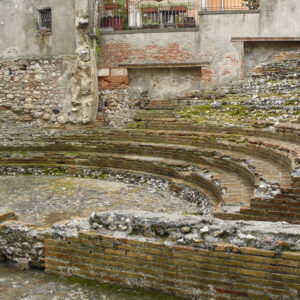


Corso Umberto
The main street of Taormina is dedicated to Umberto I of Savoy. Bordered by Porta Messina and Porta Catania, it shows buildings belonging to styles from different eras. … read more
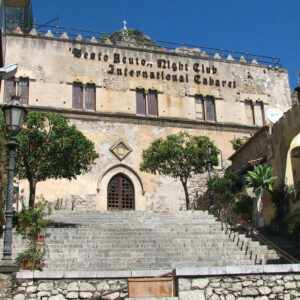
Palazzo Ciampoli
Palazzo Ciampoli was built in 1412 as carved on the main entrance. Until a few years ago the building has housed a famous nightclub of Taormina. Today, it is possible to admire the main entrance and the beautiful stairway. … read more
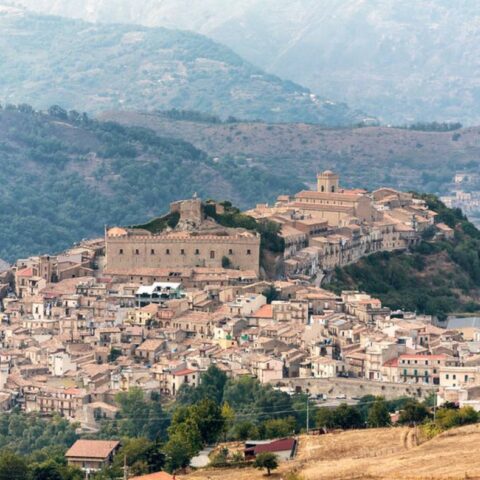
Montalbano Elicona
Montalbano Elicona, reborn as a Medieval Resort, enchants with a labyrinth of alleys and the majestic Swabian-Aragonese castle. The churches, artistic treasures, showcase works from the Gagini school. The sanctuary and the scenic views from the belvedere complement the medieval charm, creating a captivating experience for visitors. … read more
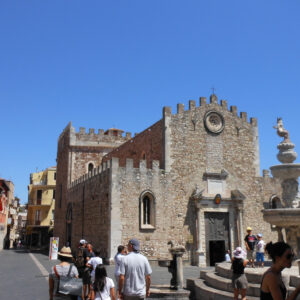
Duomo square
The Duomo Square of Taormina houses the Cathedral and a fountain. The latter, which stands at the center of the square, consists of two basins above which stands a statue depicting the emblem of the city: the centaur biped with a female bust. … read more
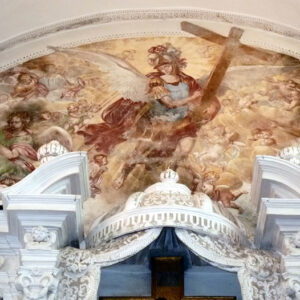
Church of Varò
The church of Varò dates back to the fifteenth century but a crypt inside the church hints that the Church has more ancient origins. It hosts the statue of the Madonna Addolorata and a beautiful fresco depicting the triumph of the Cross. … read more
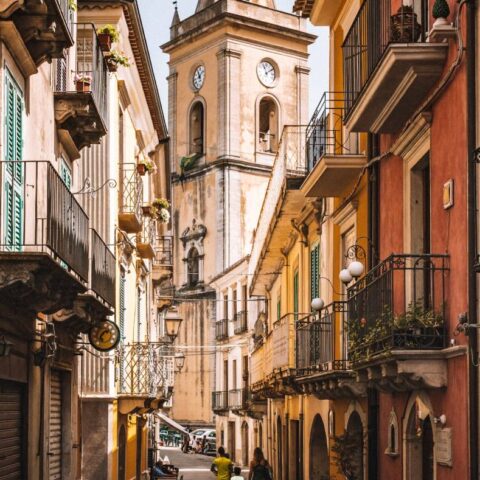
Novara di Sicilia
Novara di Sicilia, a timeless village, reflects harmonious architecture from the Norman era to the 18th century. Gothic and Baroque churches, stone-paved streets, and the Giorginaro Mill contribute to its historical charm. … read more

Church of St. Joseph
The Church of St. Joseph stands in the Piazza IX Aprile, next to the Clock Tower. A double ramp fenced with carved Siracusa stone balustrade leads to the parvis, where the big central portal in marble of Taormina in different colors is. … read more

Arabian Necropolis
In via Luigi Pirandello, outside the city walls that defended the town of Taormina, are the remains of an Arabian necropolis. According to historians, the necropolis extended toward northeast, between the existing ruins and the Church of St. Pietro. … read more
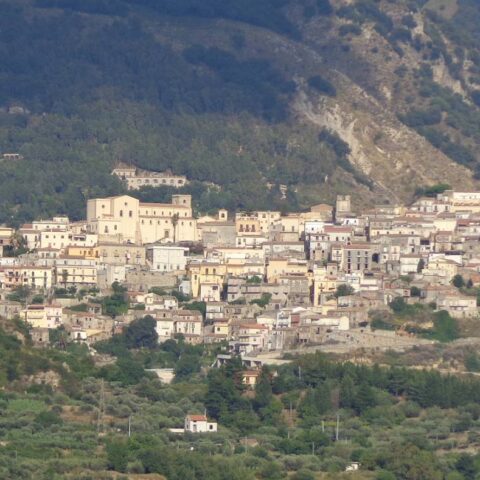
Castroreale
The picturesque village of Castroreale, nestled on the Sicilian hills overlooking the Tyrrhenian Sea, presents itself as an artistic and natural treasure. … read more
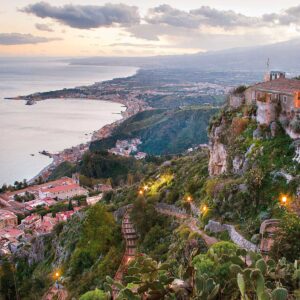
Church of Madonna of the Rock
Built in the twelfth century, the Church of the Madonna of the Rock takes its name from the peculiarity of being built and carved in the rock. It is a place of pilgrimage where every third Sunday of September the Madonna della Rocca is celebrated. … read more

Palazzo Badia Vecchia
Badia Vecchia palace is a fourteenth century tower, that was part of the town’s defensive walls. Restored over the centuries, it is the house of the Archaeological Museum of Taormina, which hosts finds from the Hellenistic and Roman periods. … read more

Castelmola
Once acropolis of Taormina, its derives from the Norman castle and the shape of the rock on which it stands, similar to a “mola di pietra” (that is the millstone). Thanks to its beauty, it is today a member of the club “The Most Beautiful Villages in Italy”. … read more
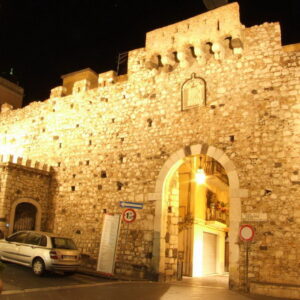
Porta Catania (Catania Gate)
Porta Catania, part of the city walls, enables access from the South to Corso Umberto I, main street of Taormina. It was built in 1440, as it is engraved in the aedicule, placed above the arch, and it is also called “Porta del Tocco”. … read more
- 1
- 2